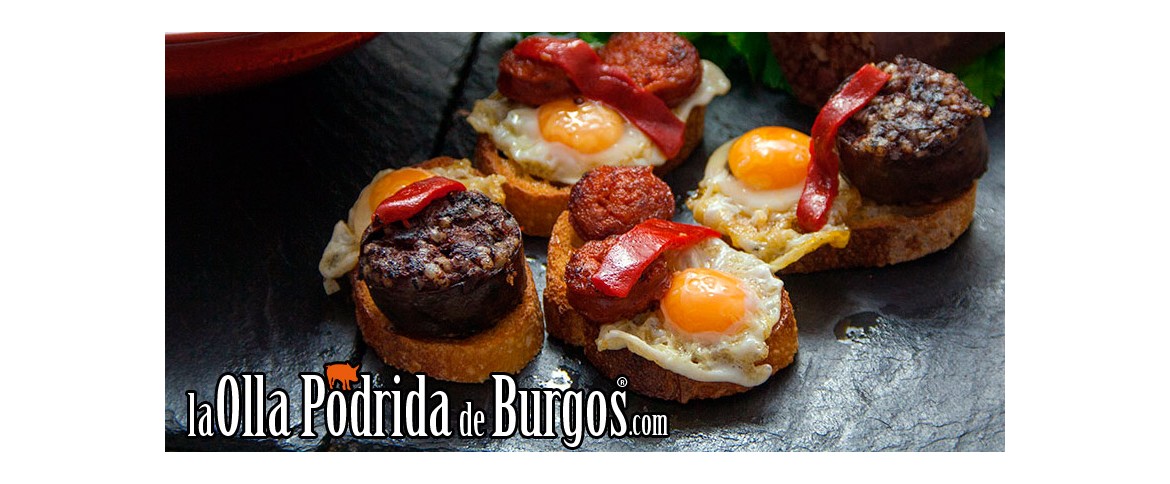
Cojonuda y Cojonudo El típico matrimonio burgales
El Cojonudo y la Cojonuda, dos representantes clásicos de la cultura de tapas en Burgos. Elaborados con Morcilla y Chorizo de Burgos durante más de 50 años. Os dejamos unos consejos para su elaboración y un pequeño artículo Británico que os resultará interesante para ver como ven nuestros pinchos en el extranjero.
- Huevos de codorniz
- Rodajas de chorizo normal, picante o muy picante
- Rodajas de morcilla de Burgos
- Pimiento rojo picante (en Burgos los llamamos divisas)
- Tostas de pan o rodajas de barra de pan
- Se pasan las rodajas de morcilla y chorizo por una sartén con un poco de aceite de oliva.
- En la misma sartén echamos los huevos de codorniz, dejar que se haga la clara sin cocinar la yema.
- De igual manera ponemos un momento tiras de pimiento en la sartén.
- Montamos los pinchos y comer enseguida.
HOLAFOODIE.COM
Let’s get things straight from the beginning… ‘Cojonudo’ is a Spanish word that comes from the term ‘cojones’ (bollocks, testicles). It literally refers to someone who has a pair of big balls. Considering that the name for our tapa today is feminine – cojonudA – and consequently a ‘girl’, it could literally be translated as the ‘girl with a pair of big balls’.
But don’t get too excited just yet! In Spanish cojonudo also means ‘wonderful’ or ‘excellent’. When we refer to something as cojonudo or cojonuda, it means that we really love it because it’s ‘bloody great’.
It’s this second meaning of the word cojonuda the reason why this tapa received its name. Funnily enough, it’s not the only Spanish food also known under this name. A type of white asparaguses from Navarra are also called cojonudos. Allegedly because of King Juan Carlos, who after tasting one said: “this asparaguses are cojonudos!”. Although that’s a different story which we’ll tell you about some other day.
The Cojonuda is the flagship tapa of Burgos, the stunning capital city of the old medieval kingdom of Castile.
The original recipe seems to come from the villages located near the border between the regions of Castile and La Rioja, where locals started to combine a slice of bread with chorizo, pepper and a fried egg. Apparently, the recipe travelled west, all the way until Burgos, where the chorizo was replaced by local morcilla (a type of black pudding or blood sausage) to create the recipe currently known as Cojonuda.
Today, both versions of the recipe – Cojonuda (with morcilla) and Cojonudo (with chorizo) – can be enjoyed in a number of tapas bars around the main square in the old town of Burgos. Gossip says that it was ‘El Mesón de los Herreros’ (Calle San Lorenzo, 20), the first one to serve it. Personally, I love the ones in Casa Pancho (Calle San Lorenzo, 13-15) although if you happen to visit Burgos, I’d recommend to skip from bar to bar to taste, compare and decide which one you like the best.